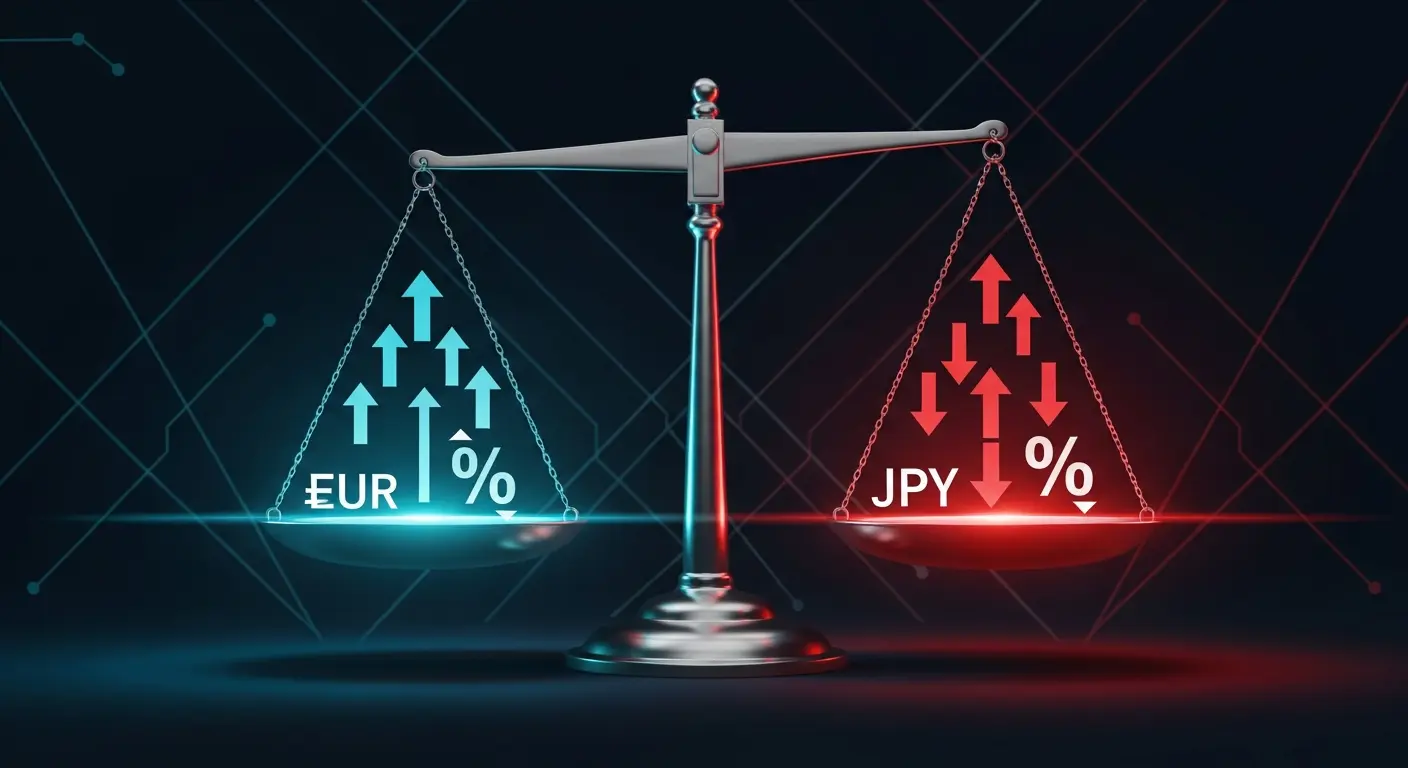
Positive vs Negative Carry Trade
Positive Carry Trade
In a traditional positive carry trade, you borrow in a low-interest currency and invest in a high-interest currency. You earn the interest rate differential as profit.
Example: Buying EURJPY when EUR rates > JPY rates. You earn swap daily.Negative Carry Trade
A negative carry trade does the opposite — you trade toward the lower-interest side, paying swap costs but profiting from price movements.
SwapSlap EA operates as a negative carry trade. It sells EURJPY, meaning it's selling the higher-interest currency (EUR) and buying the lower-interest currency (JPY).Why Does Negative Carry Trade Work?
The key insight is that interest rate differentials drive investor behavior, not just swap payments. Before midnight, investors adjust their positions based on expected swap charges. This creates predictable price drops on EURJPY that are larger than the swap cost.
SwapSlap captures this price movement in approximately 2 hours, more than compensating for any swap costs paid.
The JPY Rate Hike Factor
An important question from the SwapSlap community was: "If JPY keeps hiking rates, won't that be negative for the strategy?"
The answer is nuanced:
Current Situation
The Transformation
If JPY continues to raise rates OR EUR continues to lower rates, SwapSlap may effectively function as a positive carry trade strategy. The EA benefits from both scenarios:
Key Thresholds to Watch
Long-Term Viability
The developer has been using this strategy since January 2024. During that time:
This means minor filter updates can keep the EA profitable for the long term, regardless of which direction rates move.